About Our Liturgical Life
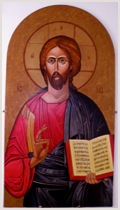
ICONS are unique religious images. By contemplating icons of our Lord, the saints, and those sacred events that are part of Christian Tradition, we strive to achieve a powerful and prayerful meditative mood. We never worship the images, themselves. Through these “windows into
BOWING and making the sign of the cross many times during liturgy is a sign of our faith in the Christian Mystery as we receive and accept God's blessings through the Church and the ministry of the celebrant who acts in the person of Christ. We also bow slightly and bless ourselves every time we glorify the Holy Trinity, especially at the end of prayers. We do not genuflect in the Byzantine tradition. Rather, we bow deeply and sign ourselves whenever we enter or leave the church.
INCENSE is used as a sign of reverence for the sacred place and for the people who are made in the image and likeness of God. It is also a sign of purification and preparation for something important about to happen. It reminds us that our prayers ascend like the smoking aroma of spiritual fragrance before the throne of God.
CONGREGATIONAL SINGING is one of the beauties of liturgy as celebrated in the Byzantine Church. As we adorn holy objects in a special way, the Word of God, related sacred texts, and inspired songs are adorned with music. Services are sung a cappella and responses are led by a cantor.
LISTENING is important during liturgical services. The scripture readings are usually chanted and not printed in our booklets. The hymns and prayers are filled with scriptural quotes and imagery and reflections by the Church ascetics. The booklets and supplements aid us in making the proper responses during liturgy and occasionally do not contain the full text of the celebrant's prayers or they contain additional texts that are not prayed at every liturgy. If your place is lost in the worship aids, look to a nearby parishioner for guidance or simply listen. It is important that the icons and other liturgical symbols are before our eyes as often as possible.
RECEPTION OF HOLY COMMUNION which is the reception of the Body and Blood of our Lord Jesus Christ is also an external sign of the unity of the members of the Catholic Church. We partake of Communion at the Divine Liturgy, our greatest form of worship and thanksgiving to Almighty God. Those who have pre-disposed themselves (through fasting, moral readiness, etc.) and who share our Catholic faith, regardless of ritual church (e.g. Byzantine Catholic, Roman Catholic), are invited to approach the altar and receive the Divine Eucharist. When approaching the priest:
1) Bow and cross yourself;
2) Say your first name to the priest if he might not know it;
3) Move immediately in front of the priest;
4) Stand straight and do not bend your knees;
5) Hold the red cloth to your chin with both hands;
6) Tilt your head back slightly (do not close your eyes); and
7) Open your mouth widely but do not extend your tongue.
The priest will bring a small spoon to your mouth and gently place the Eucharist into it. There is no need for you to say “Amen” at this time. Wait for the priest to bring his hand away from your face then close your mouth, step aside, bow and cross yourself, and return to your place.